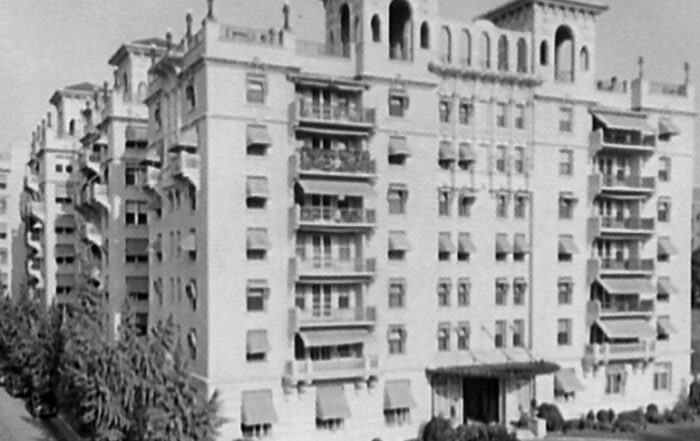
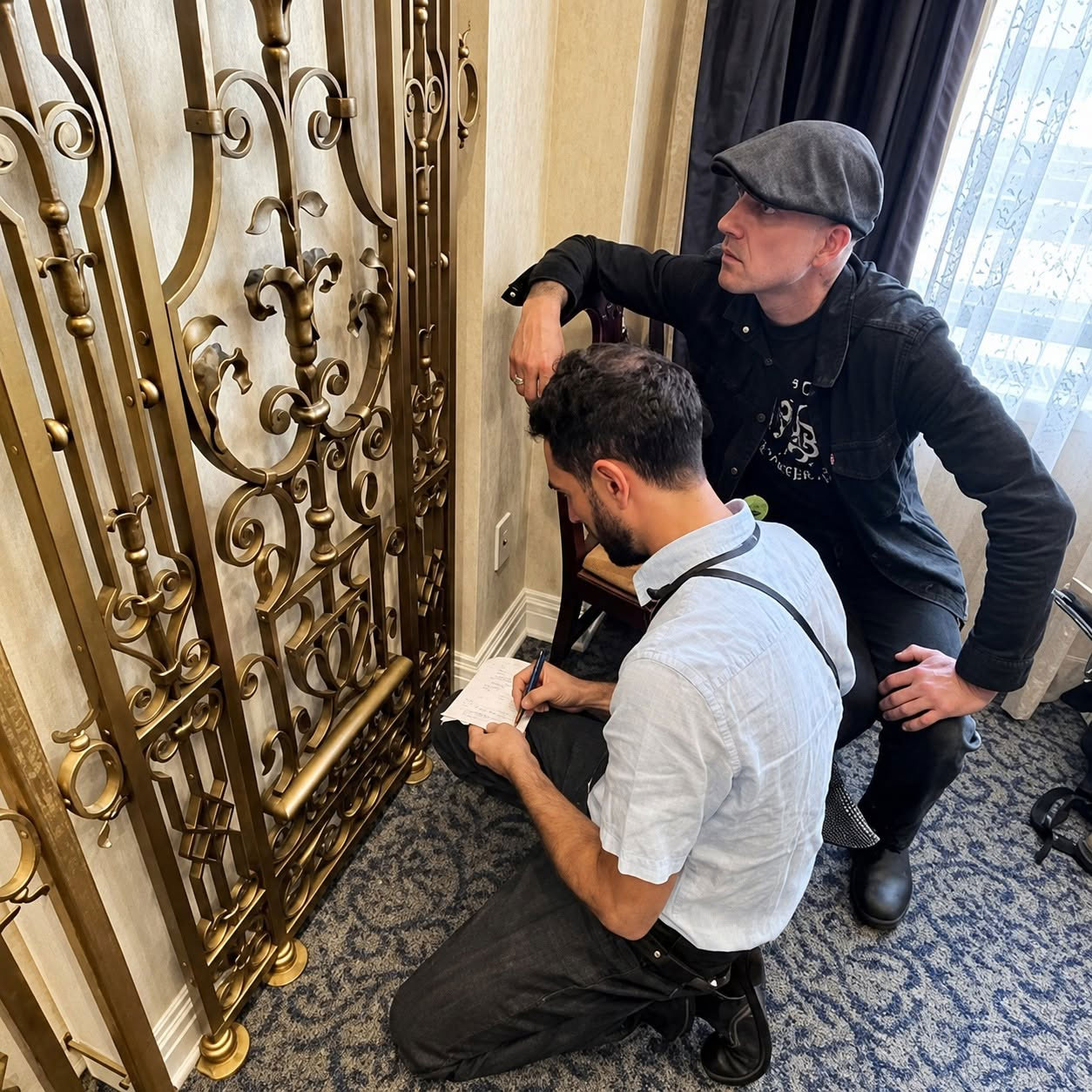
A recent visit to the Biennial Symposium on Traditional Ironwork in New York City gave our team an opportunity to study Samuel Yellin’s work up close — and reminded us why his influence on architectural metalwork still matters.
Widely regarded as one of the most important American metalworkers of the early 20th century, Yellin built a reputation around work that was technically demanding, highly detailed, and unmistakably artistic. The Metropolitan Museum of Art describes him as arguably the most important metalworker in early-20th-century America and notes that his work combined historical influences with an inventive, often playful design sensibility.
For those of us who work in architectural metal today, his work is more than beautiful to look at. It is a reminder of what is possible when craft, design, material knowledge, and attention to detail are treated as equally important.
Who Was Samuel Yellin?
Samuel Yellin was born in 1884 in what is now Ukraine and later immigrated to the United States. He established his Philadelphia workshop in 1909 and went on to become one of the country’s best-known architectural metalworkers. At the height of his business, his shop employed roughly 200 skilled craftspeople.
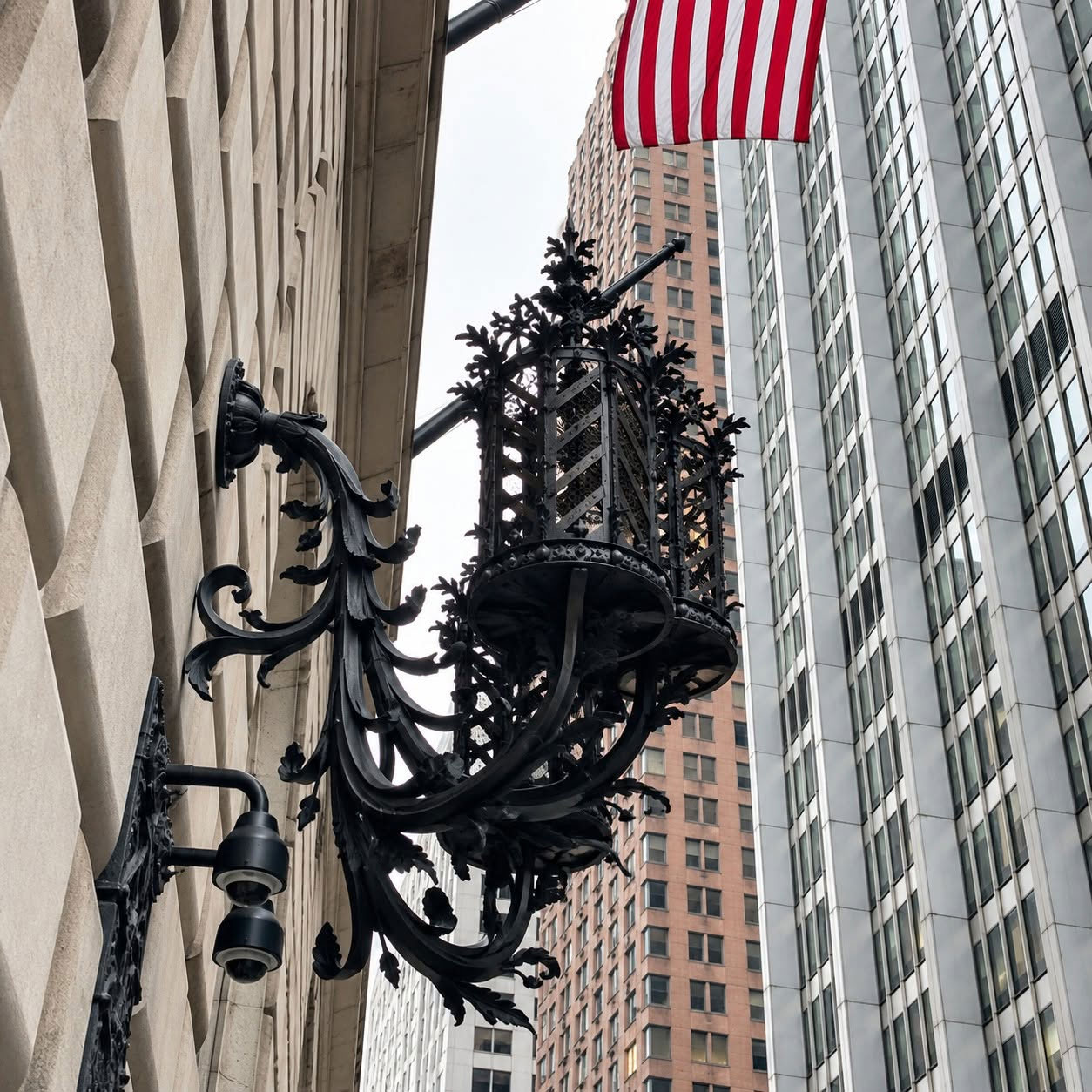
His commissions included gates, doors, railings, grilles, lanterns, fireplace pieces, hardware, and other architectural elements for important public institutions, universities, financial institutions, and private residences.
His clients included names such as Yale University, the Federal Reserve Bank, The Metropolitan Museum of Art, and prominent private patrons.
Yet scale alone does not explain why his work still commands attention.
The details do.
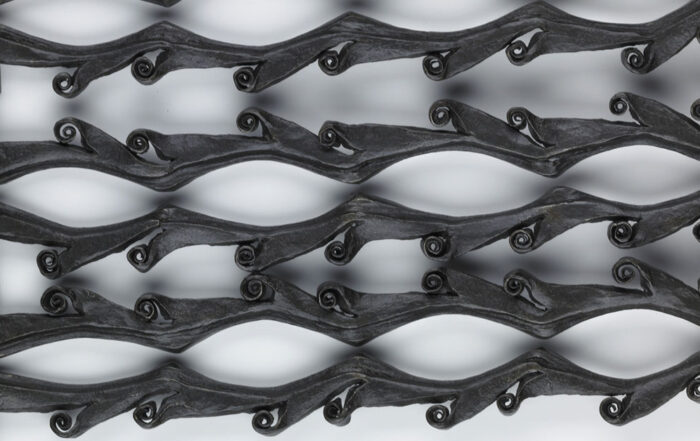
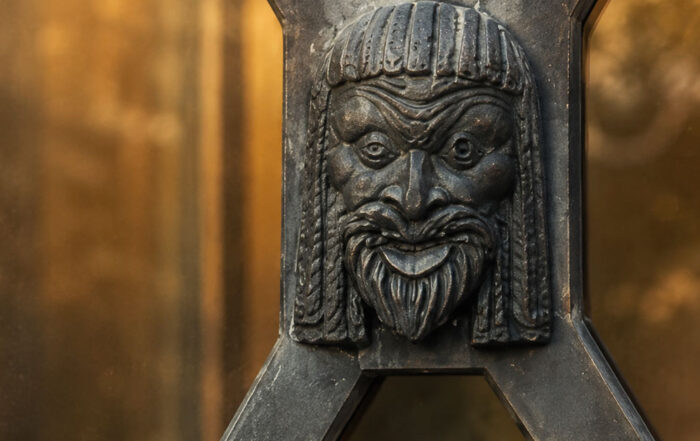
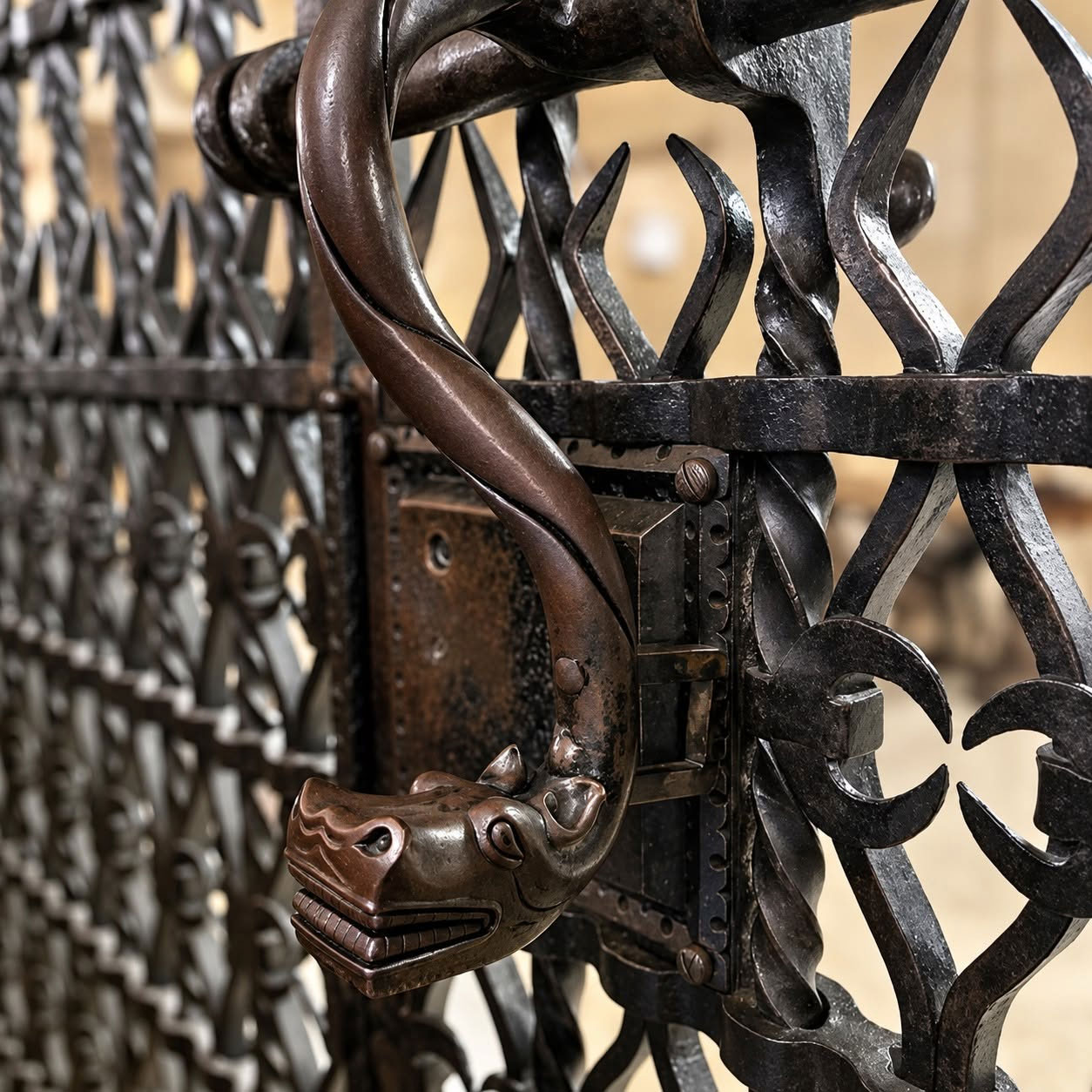
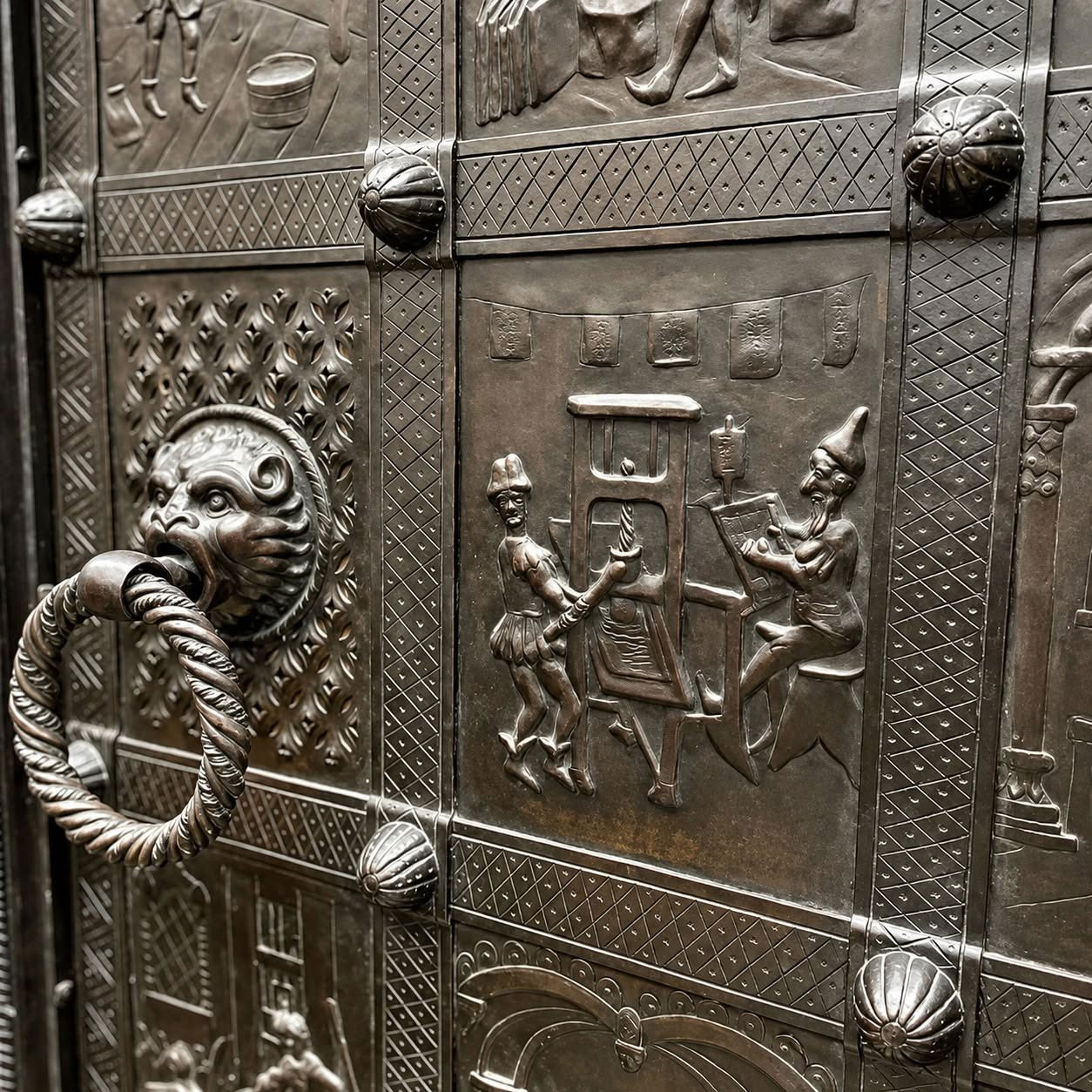
Yellin’s ironwork could be monumental, but it could also be whimsical, delicate, or even humorous. Animal faces, curling leaves, geometric patterns, flowers, figures, and historical references often appeared within highly disciplined architectural compositions. The Met’s description of one Yellin screen, for example, points to fanciful animal faces incorporated into an otherwise imposing architectural grille.
That combination of seriousness and personality is part of what makes his work feel alive nearly a century later.
More Than Ornament
It is easy to look at historic ornamental metalwork and focus on the finished appearance. But pieces like Yellin’s are also records of how they were made. Every bend, transition, connection, surface, joint, and tool mark tells part of the story.
Traditional wrought iron was shaped through repeated heating and hammering, allowing the material to be drawn, bent, forged, joined, and refined by skilled hands. The National Park Service’s documentation of historic wrought-iron production describes a process involving repeated heating and hammering to manipulate and consolidate the iron. That matters when historic metalwork is being preserved. A restoration team is not simply looking at an object and asking, “How do we make this look right?” The better questions are:
How was it made?
Why was it made that way?
What has changed over time?
Which material is original?
What can be repaired?
What should be conserved?
And if something must be recreated, how closely can the original craftsmanship, proportions, material character, and fabrication logic be respected?
Those questions are just as important today as they were when Yellin’s shop was operating.
Perfection Was in the Details
One of the most striking things about Yellin’s work is that the level of care does not appear to diminish simply because an element is small. A monumental gate might receive extraordinary attention, but so might a hinge, handle, bracket, fireplace tool, or decorative detail. That philosophy is worth paying attention to.
Architecture is experienced at many scales. From across the street, we see the composition. At the entrance, we see the gate. When we reach for the door, we see the handle. The craftsmanship has to hold up at every distance.
Looking Back to Move the Craft Forward
Yellin drew heavily from earlier European metalworking traditions, particularly Medieval and Renaissance examples, but he did not simply copy them. His work interpreted historic forms for new buildings, clients, and architectural settings. That idea feels especially relevant to preservation work today. Historic preservation is not about freezing craftsmanship in time. It is about understanding it well enough to make informed decisions about what happens next.
Modern architectural metalworkers have tools Yellin could not have imagined: 3D scanning, digital modeling, CNC equipment, waterjet cutting, advanced engineering software, and additive manufacturing. Those technologies can dramatically improve documentation, coordination, accuracy, and efficiency.
But technology does not replace an understanding of the original work. It supports it.
A scan can capture geometry.
A model can document dimensions.
A waterjet can cut with remarkable accuracy.
But someone still has to understand what the original craftsperson was trying to accomplish — and how the material should ultimately look, feel, and perform.
That balance between traditional knowledge and modern capability is becoming increasingly important in architectural metal restoration.
What Samuel Yellin Still Teaches Modern Metalworkers
Perhaps the most enduring lesson in Yellin’s work is that craftsmanship is not simply a production method. It is a way of paying attention.
The Met’s collection includes a prototype grille Yellin created for the Pierpont Morgan Library Annex around 1928. The museum describes it as evidence of his “total mastery” of iron, while also emphasizing the sophistication and playfulness of the design. That combination is important.
Technical mastery does not have to result in work that feels mechanical.
Precision does not have to eliminate personality.
And historical influence does not require imitation.
The strongest architectural metalwork often contains all three: technical control, design, and evidence of the human hand.
Preserving Work That Was Built to Last
At Allen Architectural Metals, much of our work begins where craftspeople like Yellin left off.
Historic metal may arrive damaged, corroded, missing components, structurally compromised, altered by previous repairs, or simply affected by a century of exposure and use. The goal is rarely to make something look new. The goal is to understand what survives and determine the most appropriate path forward.
That may involve conservation, repair, metal stitching, replication of missing components, pattern making, casting, fabrication, engineering, or a combination of traditional and modern processes. Every project requires its own answer. And that is perhaps where Yellin’s legacy feels most relevant. The standard is not simply whether something can be made.
The question is whether it can be made accurately, and with enough understanding of the original craftsmanship to deserve its place alongside the historic work.
A Craft Worth Studying
Samuel Yellin died in 1940, but his work remains part of buildings and museum collections across the country. The Metropolitan Museum of Art alone holds numerous examples of his architectural ironwork, including doors, screens, grilles, railings, fireplace pieces, and hardware and the Historic Blacksmith Conservancy is actively preserving and promoting Yellin’s legacy with the recent purchase of his tool collection through strategic partnerships and enthusiasm. Their conservation work and educational programming will certainly allow many more to engage with historic metals and the craft.
For preservation professionals and architectural metalworkers, that work provides something particularly valuable.
A benchmark.
Not because every piece of architectural metalwork should look like a Samuel Yellin piece.
It shouldn’t.
But the level of thought behind it — the respect for the material, the discipline of the craft, the attention to even the smallest detail — remains something worth aspiring to.
Nearly a century later, our tools have changed dramatically.
The responsibility has not.
More From Allen Metals