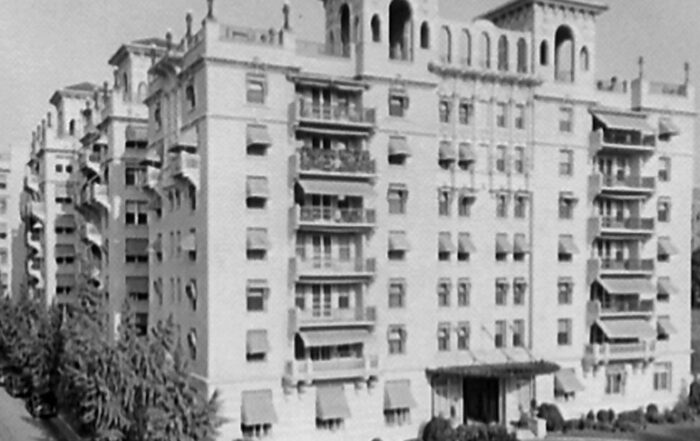
At 2400 16th Street NW in Washington, D.C., The Envoy stands across from Meridian Hill Park with the kind of quiet presence that often belongs to buildings with the most interesting pasts.
Originally opened in 1918 as Meridian Mansions, the building was considered one of Washington’s finest apartment hotels of its era. Designed during a period when 16th Street was being shaped into a grand boulevard of mansions, embassies, and prestigious residences, Meridian Mansions was built to impress. It reportedly cost $950,000 to construct, making it the most expensive apartment house in the city at the time.
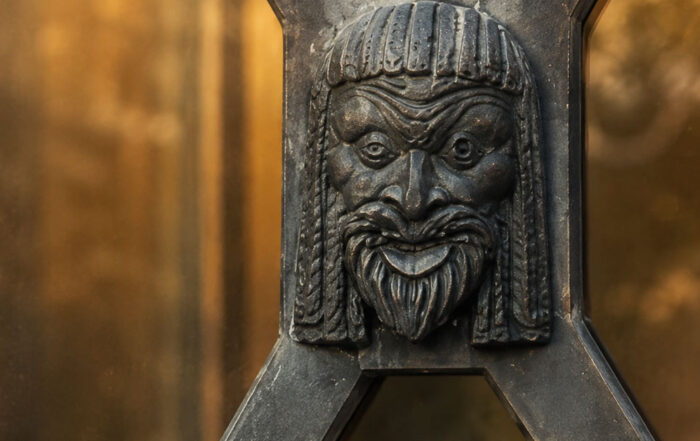
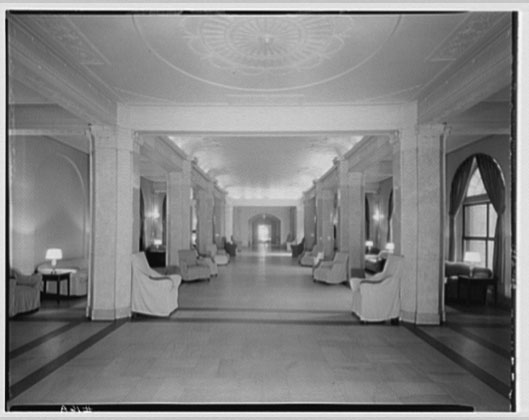
But like many great historic buildings, The Envoy’s story is not only found in its scale or its address. It is found in the details: the terra cotta ornament, the marble lobby, the cast iron balcony cartouches, and the entrance canopy that still marks the transition from public street to private interior.
A Building Designed for Washington Society
Meridian Mansions was built by Kennedy Brothers, Inc., a Washington development firm whose work helped shape the evolution of apartment living in the city. The National Register nomination describes the building as a seven-story apartment hotel clad in pale tan brick and terra cotta, with an eclectic design loosely following Beaux-Arts principles and ornament adapted from Italianate precedents.
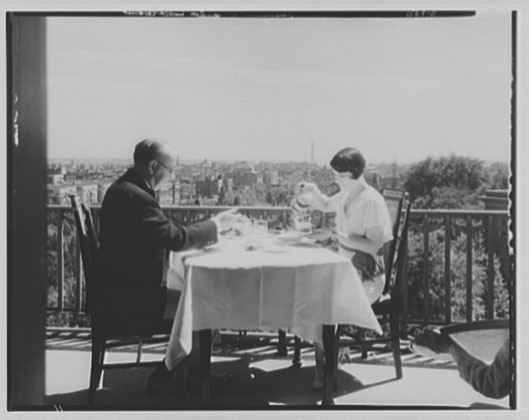
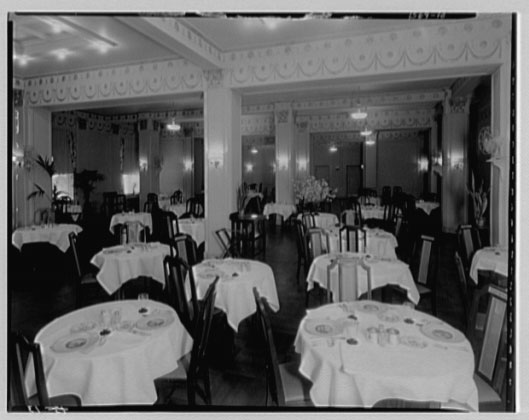
Its original amenities reflected its ambition. Early accounts describe roof gardens, rooftop pavilions, tennis courts, a public dining room, ballrooms, and a refrigerating plant that eliminated the need for ice delivery in individual apartments.
This was not simply an apartment building. It was a place to arrive.
And people did.
Over the years, Meridian Mansions was home to members of Congress, diplomats, cabinet members, and representatives of foreign governments. A 2000 Washington Post article noted that cabinet members from the Wilson, Harding, Coolidge, and Hoover administrations entertained there, and by 1921 the building was home to multiple senatorial families and the Embassy of Bolivia.
It even earned the nickname “Senatorial Beehive” because of the number of senators and their families who lived there.
Where World History Passed Through the Door
One of the most significant stories tied to The Envoy reaches far beyond Washington real estate.
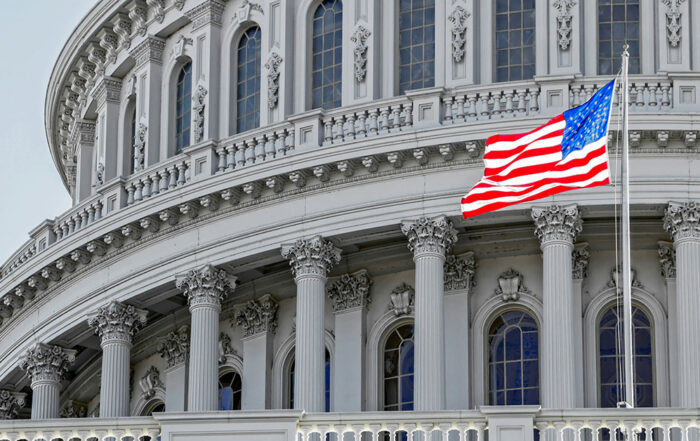
Tomáš Garrigue Masaryk, the founder and first president of Czechoslovakia, lived at Meridian Mansions in 1918. During that period, the United States recognized the Czechoslovak National Council, helping clear the way for Czechoslovak independence. According to the National Register nomination, the first flag of independent Czechoslovakia was flown from the building on October 18, 1918.
That is the kind of historic association that gives a building more than architectural significance. It gives it a role in the making of nations.
The Cast Iron Connection
For Allen Metals, one of the most compelling aspects of The Envoy is found in the ornamental metalwork.
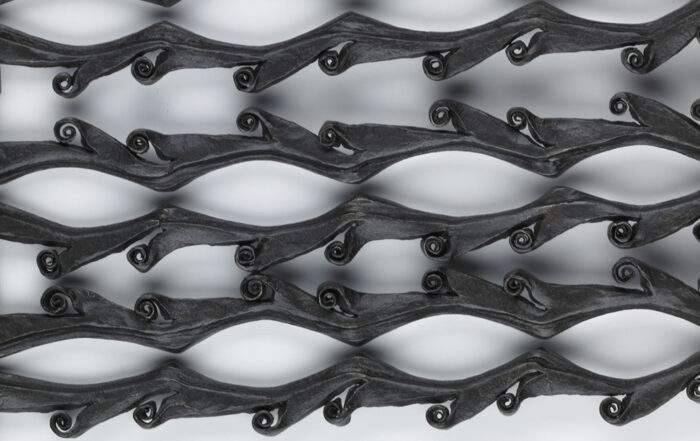
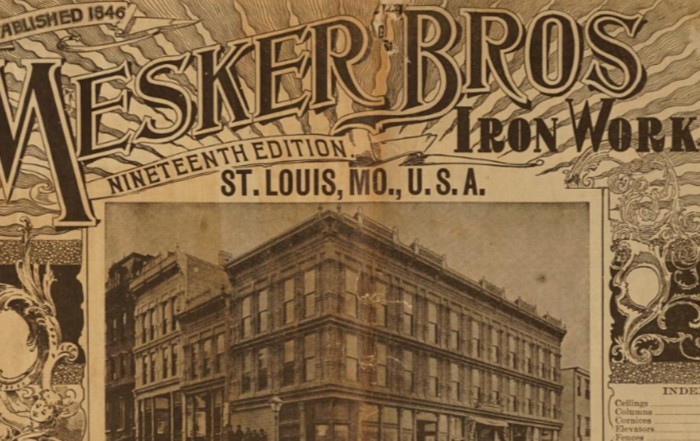
The National Register nomination specifically notes cast iron cartouches at the center of the metal railings on each balcony. The same cast iron cartouche motif also appears between the piers of the parapet roof.
The building’s entrance is equally important. The nomination describes the principal entry as framed by a Greek key door surround, sheltered by a canopy supported by rods extending from lion heads at the second-floor level.
These are the details that make historic restoration both technical and meaningful. A canopy is not merely a covering. On a building like The Envoy, it is part of the architectural language. It helps define the entrance, preserve the symmetry of the façade, and communicate the original character of the building.
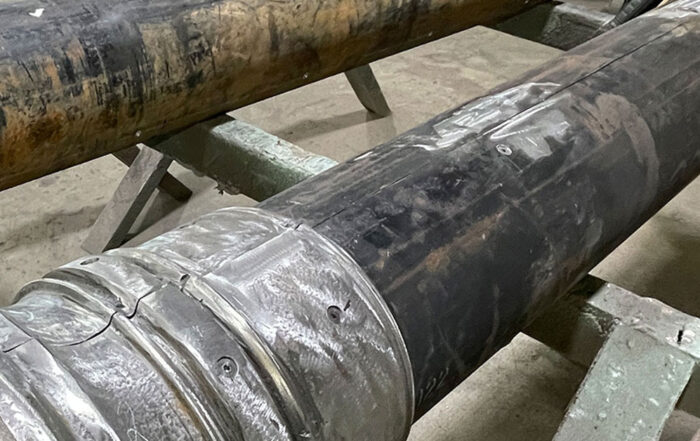
Restoring such an element to its original state requires more than repair. It requires careful study of historic documentation, material behavior, fabrication methods, attachment points, profiles, ornament, and finish. The goal is not to make the piece look new. The goal is to return it to its rightful place in the story of the building.

A Building With More Than a Few Stories
While no credible ghost story surfaced in the available sources, The Envoy hardly needs one. Its documented history has plenty of drama.
In the 1940s, a dispute arose over the building’s luxurious rooftop apartment. District officials argued that using the penthouse as living quarters violated the 1910 building height law, which prohibited human habitation above the legal building height. The matter was not fully resolved until 1952, when an act of Congress, signed by President Harry Truman, allowed the penthouse to be used as office space — but not as living quarters.
The building also passed through periods of financial trouble, ownership changes, and attempted redevelopment. In the late 1950s, owners reportedly faced insolvency, tax liens, court cases, and even a sit-down by maids and handymen over unpaid wages.
In the 1960s, Adam Clayton Powell Jr. was connected to an attempted purchase of the building for conversion into housing for elderly Black residents. The plan drew opposition from neighborhood groups and diplomatic interests, in part because the building was serving as housing for African diplomats and foreign visitors connected to nearby Meridian House. The plan was eventually abandoned.
After the 1968 riots, The Envoy was used as temporary housing for families displaced by the unrest. Later came rent strikes, foreclosure, vacancy, and renewed preservation interest.
There is even a business-history footnote: according to the National Register nomination, former Hotel 2400 proprietor Frank M. Perper and a guest began planning a nationwide network of franchised hotels in the late 1930s that would be called “Holiday Inns.”
For one building, that is a remarkable amount of life.
Preservation as Continuity
The Envoy has changed names, owners, layouts, and uses. Its rooftop pavilions and ballrooms are gone. Interior spaces have been altered. Yet the building still retains many of the elements that connect it to its original identity: its massing, its relationship to Meridian Hill Park, its terra cotta ornament, its grand lobby, and its surviving ornamental metalwork.
That is why details matter.
A cast iron cartouche, a lion-head support, a canopy rod, or a historically accurate finish may seem small against the scale of a seven-story building. But these elements carry the hand of the original designer, the expectations of the first residents, and the craft traditions of the period in which the building was made.
At The Envoy, the entrance canopy is more than an architectural feature. It is an invitation back into the building’s original character.
And for a building that has housed senators, diplomats, displaced families, artists, professionals, and the dreams of a new nation, preserving that character is no small thing.
More From Allen Metals